
©Michel Didier Joomun
Seminar I: Sound, Art and Technology - Master in Musical Computation and Sound Design at the University of Coimbra
This semester, the chair Seminar I - Sound, Art and Technology for the Master's in Musical Computation and Sound Design at the University of Coimbra will be hosted by Professors Luís Bittencourt and Nádia Moura.
They will welcome a distinguished roster of guest lecturers, including artist-researchers Enrico Bertelli, Jorge Graça, Juan Parra, Anna-Maria Christodoulou, Gilberto Bernardes, Nádia Carvalho, Rui Penha, Jonatas Manzolli, Aleksandra Michałko, Mariam Gviniashvili, Riccardo Wanke, and Rafael Maia, alongside Bittencourt and Moura. The sessions will take place at the Centro de Artes e Espetáculos of Figueira da Foz and are open to general public. The schedule and synopsis of the sessions are below, as well as biographies of the guests. Be most than welcome to join us!
November 24th
9h—11h: Introduction by professors Luís Bittencourt and Nádia Moura
11h—13h: Enrico Bertelli: Let's Talk
14h—16h: Jorge Graça: Imaginary Birds
November 25th
11h—13h: Juan Parra: Opaque Technology and Contemporary Network Arts: Artistic and Technological Strategies
14h—16h: Anna-Maria Christodoulou: Computational analysis of music performance: A multimodal approach
November 26th
10h—12h: Gilberto Bernardes: Computational Framework for Performance Analysis in Traditional Music: A Case Study of Carlos Paredes' Guitar-Voice Collaborations
12h—14h: Nádia Carvalho: The Musical Work as a Mutable Interface: Towards a Co-Creative Electroacoustic Practice
December 2nd
11h—13h: Rui Penha: Abusing technology like an artist
14h—16h: Luís Bittencourt: Directionlessness and the Question of Instrumentality in Artistic-Research
16h—18h: Film session: Sur la Stre Nuro - Na Corda Bamba // Uncharted Soundscapes + Q&A with the film director Luís Fernandes
December 3rd
11h—13h: Raquel Castro: to be announced soon
14h—16h: Jonatas Manzolli: Creativity
16h—18h: Aleksandra Michałko: High Tech and Sensorimotor Skill Acquisition in Instrumental Music Learning
December 9th
11h—13h: Mariam Gviniashvili: Artistic Practice in Context
14h—16h: Riccardo Wanke: Seeing Sounds, Hearing Shapes. The morphodynamics of sounds
16h—18h: Rafael Maia: Transforming perception into Expression
December 10th
9:30h—13h: Presentation of student’s work
14h—16h: Presentation of instruments by the students
Enrico Bertelli
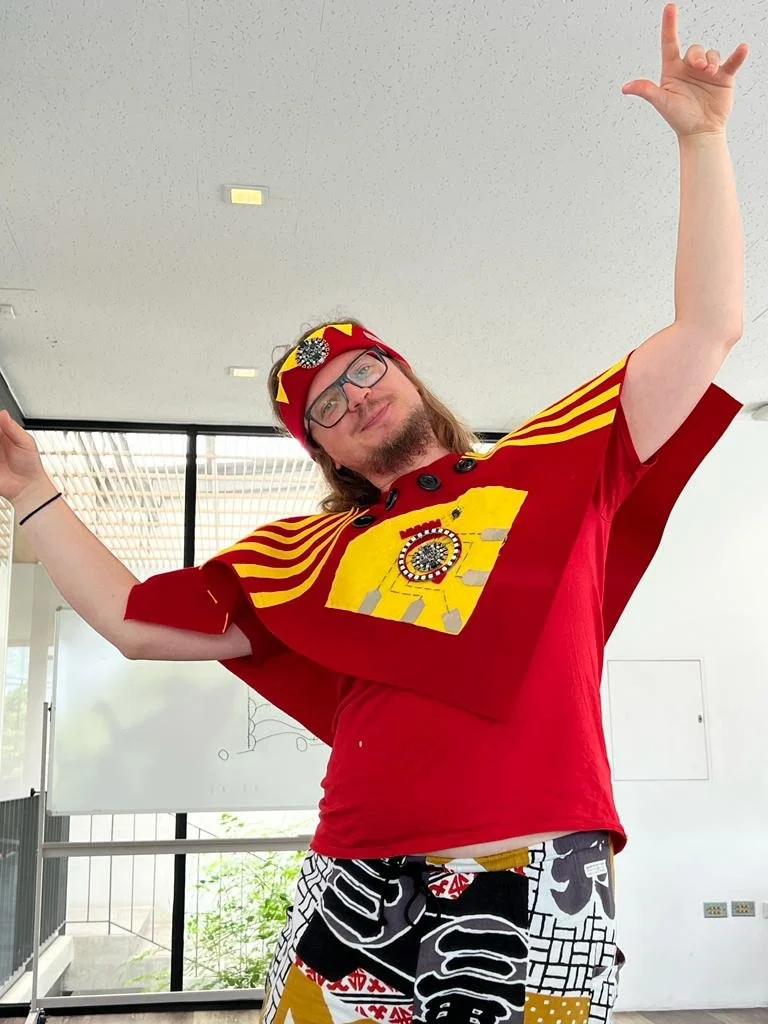
Prof. Enrico Bertelli is a percussionist, social entrepreneur, and researcher working at the intersection of music, technology, and education. As Co-founder and Executive Director of Conductive Music CIC, he has led large-scale STEAM programmes reaching over 15,000 marginalised young people annually, integrating music technology for non-musicians and building creative confidence through accessible electronic instrument design. At Lingnan University, he develops GenAI-enhanced general education, curating experiential learning that blends music, creativity, and data-driven technologies. His international practice in electroacoustic percussion and Performance as Research informs his commitment to nurturing transferable, interdisciplinary skills for a rapidly evolving digital culture.
https://conductivemusic.uk/ | LinkedIn
Let’s Talk — Synopsis
Let’s Talk equips students with practical AI-literacy through hands-on chatbot design. We present with zero-shot prompting (e.g., “Act as [Musician's Name] responding to a [Composition/Songwriting] question”) to observe how LLMs behave without context. We then move to one-shot and multi-shot examples, teaching students how model behaviour shifts when given demonstration questions and answers. Next, we build attachment-based bots, instructing AI to answer only from uploaded transcripts, speeches, and notes, using quotes and citations. The project culminates in creating a free RAG-bot in Google Colab, where we fine-tune prompt engineering, retrieval, and evaluation to develop grounded, empathetic, evidence-based conversational agents.
Jorge Graça
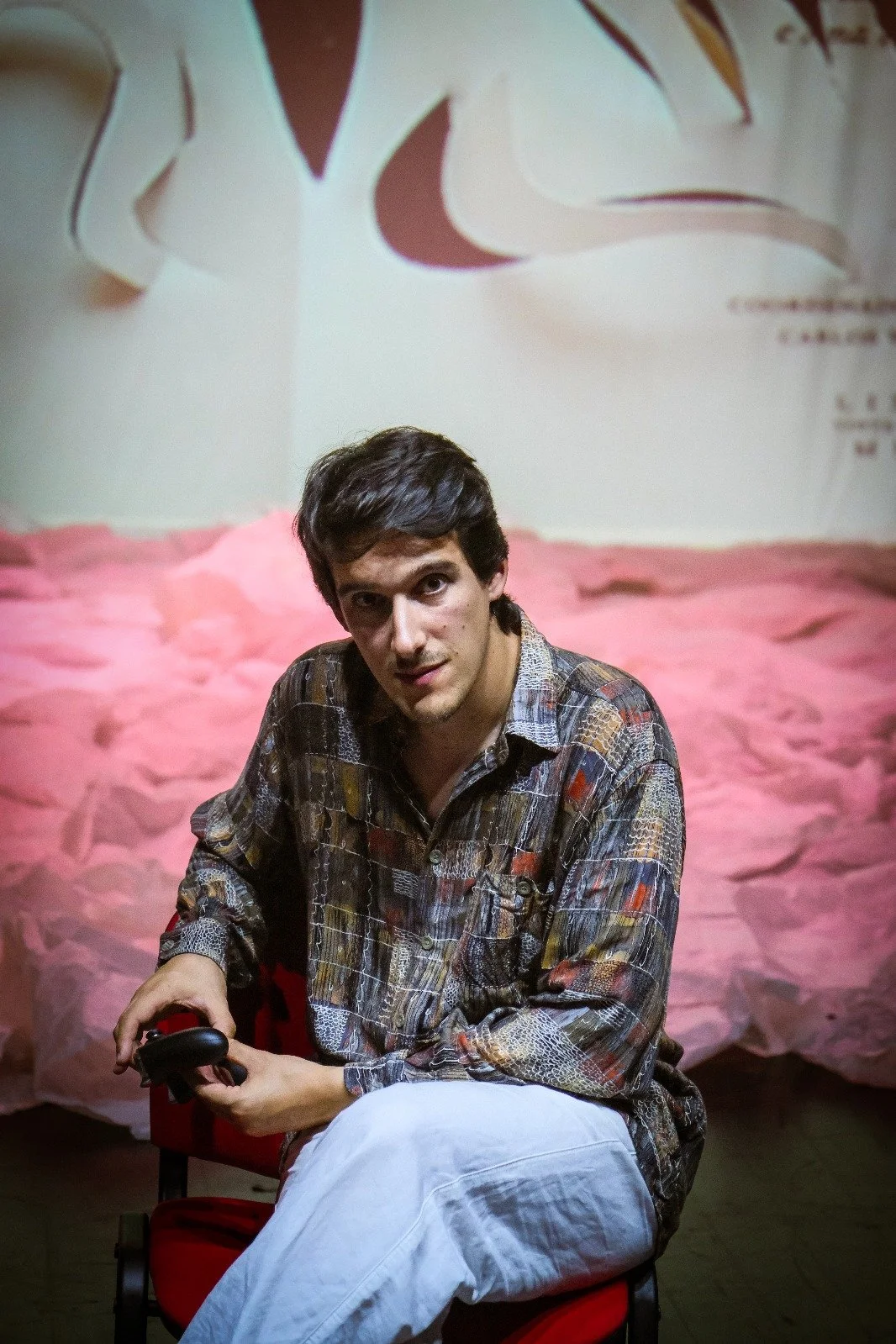
Jorge Graça has a PhD in Musical Sciences at NOVA FCSH, and a researcher in CESEM where he develops research in Community Music projects. With a Master’s degree in Music Teaching (Saxophone) from the University of Aveiro (2016), he taught Saxophone, Ensemble Music and Music and Computer Technologies at the David de Sousa Conservatory of Music (2014-2020). Saxophonist, composer and ‘inventor’, he has performed all over the country with the quartet Noscalla, of which he is a founding member, and currently dedicates himself to solo projects that integrate electronic music and performance technologies. With a strong investment in Music in the Community initiatives, he develops multidisciplinary artistic practices and creates inclusive musical instruments and interfaces, adapted to various abilities, using digital technologies. In 2022, he released ‘Canta Ceifeira’, the inaugural album of his Fauxclore project, through which he also organises the ‘Pássaros Imaginários’ workshop. In 2022 he implemented the ‘Postcards’ community project. He regularly collaborates with the Companhia de Música Teatral on artistic and educational projects, including ‘Pianoscópio’, ‘O Céu por Cima de Cá’, ‘Canção da Terra’, ‘Com Palavras Amo’ and ‘Cartografia Sonora Imaginária’, participating as a performer, musician, production assistant and creator of objects and soundscapes for artistic installations.
Imaginary Birds — Synopsis
Imaginary Birds are one of the few bird species that are not endangered. They exist in the realm of the imagination, just like their digital cousins, the CyberBirds, created by mankind with the aid of technology. Imaginary Birds are born from people's fertile imaginations, with a simple goal - to facilitate a deeper connection between humans and real birds. Sometimes they fly alone, their songs weaving unexpected harmonies in the air. At other times, however, they rely on the accompaniment of human voices to unlock the full range of their own arias and recitatives.
This workshop blends digital technology with music, harnessing the capabilities of smartphones, computers, MIDI controllers and even the physical presence and movement of the participants as interfaces for musical expression. Reactive and adaptable software processes the participants' inputs, transforming them into bird melodies, like an Imaginary Birds song translator. Mobile phones become the heart of an interactive audio system, absorbing the soundscape and responding in the language of birdsong.
Juan Parra Cancino
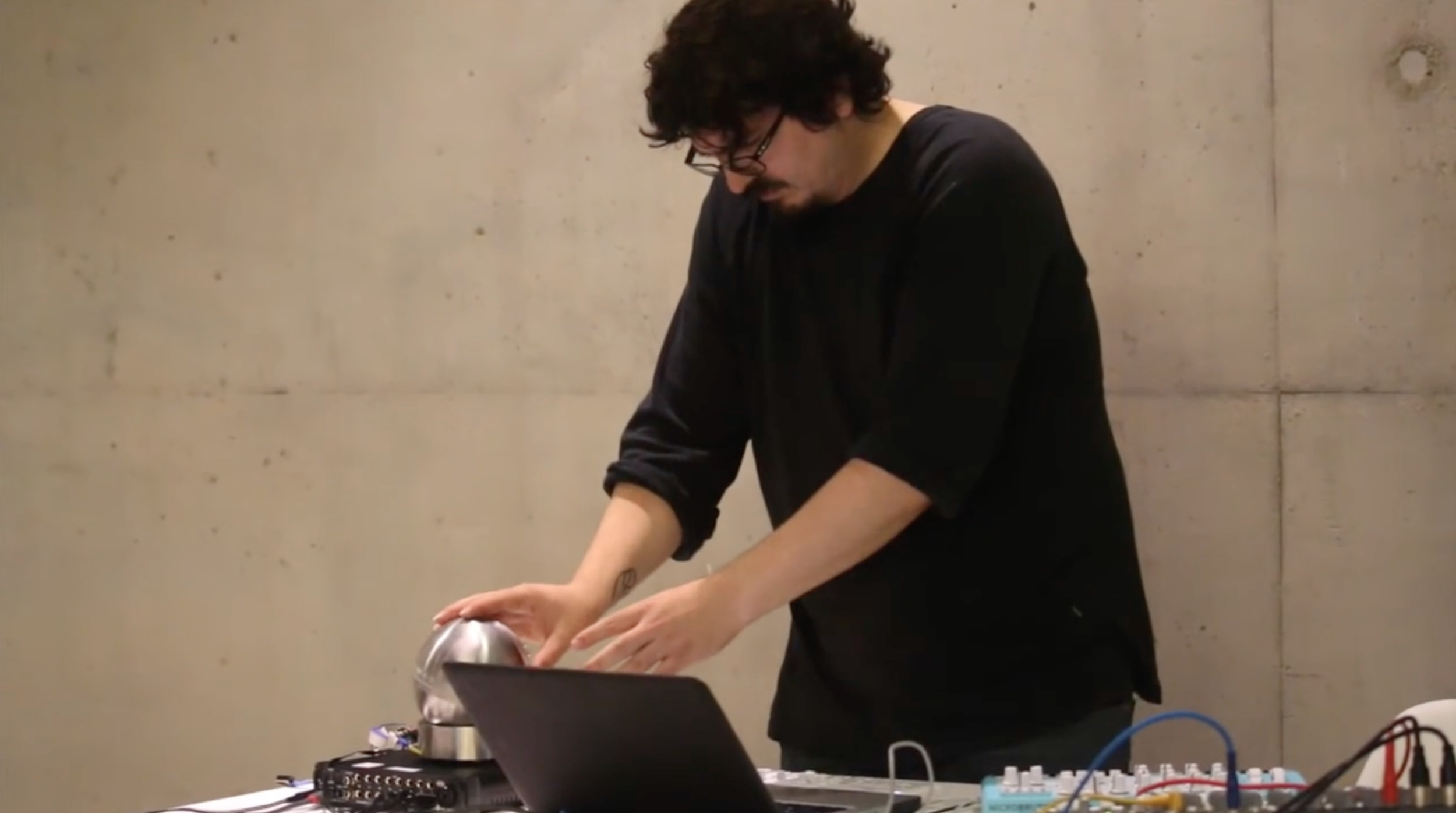
Juan Parra Cancino studied Composition at the Catholic University of
Chile and Sonology at the Royal Conservatoire The Hague (NL), where he obtained his Master's degree with a focus on composition and performance of electronic music. In 2014, Juan obtained his PhD
degree from Leiden University with his thesis “Multiple Paths: Towards
a Performance Practice in Computer Music”. As a guitarist, Parra is a
member of various guitar ensembles such as the Berlin Guitar
Ensemble and the Buenos Aires Guitar Ensemble. His work in the field
of live electronic music has made him the recipient of numerous grants such as NFPK and the International Music Council. Parra is the founder of The Electronic Hammer and Wiregriot. Since 2009 he has been a fellow researcher at the Orpheus Institute (Ghent, BE), focused on performance practice in Computer Music. Juan has been recently
appointed as Regional Director for Europe of the International
Computer Music Association for the period 2022-2026.
Website | Instagram | Facebook | X | Mastodon | Bluesky
Opaque Technology and Contemporary Network Arts: Artistic and Technological Strategies — Synopsis
This presentation will look at the relationship between composers and the tools and techniques used in the studio to create seminal works of electronic music during the 1950s, 60s, and 70s, highlighting the tension between creative intention and technical affordance. Identifying those elements, and the performative and experimental actions conducted at the studio during the creative process (loop manipulation, filter operations). Starting from the notion of the electronic music practitioner as a three-folded role, I will present different strategies towards the performance with electronics today, approaching early repertoire with current technology, seeking analogous ‘points of breaking’, to transport to the current time the creative/technological tension of the original pieces, while translating from the studio to the stage (some of) the performative actions. Special consideration will be given to current network technologies and their creative applications in performance.
Anna-Maria Christodoulou
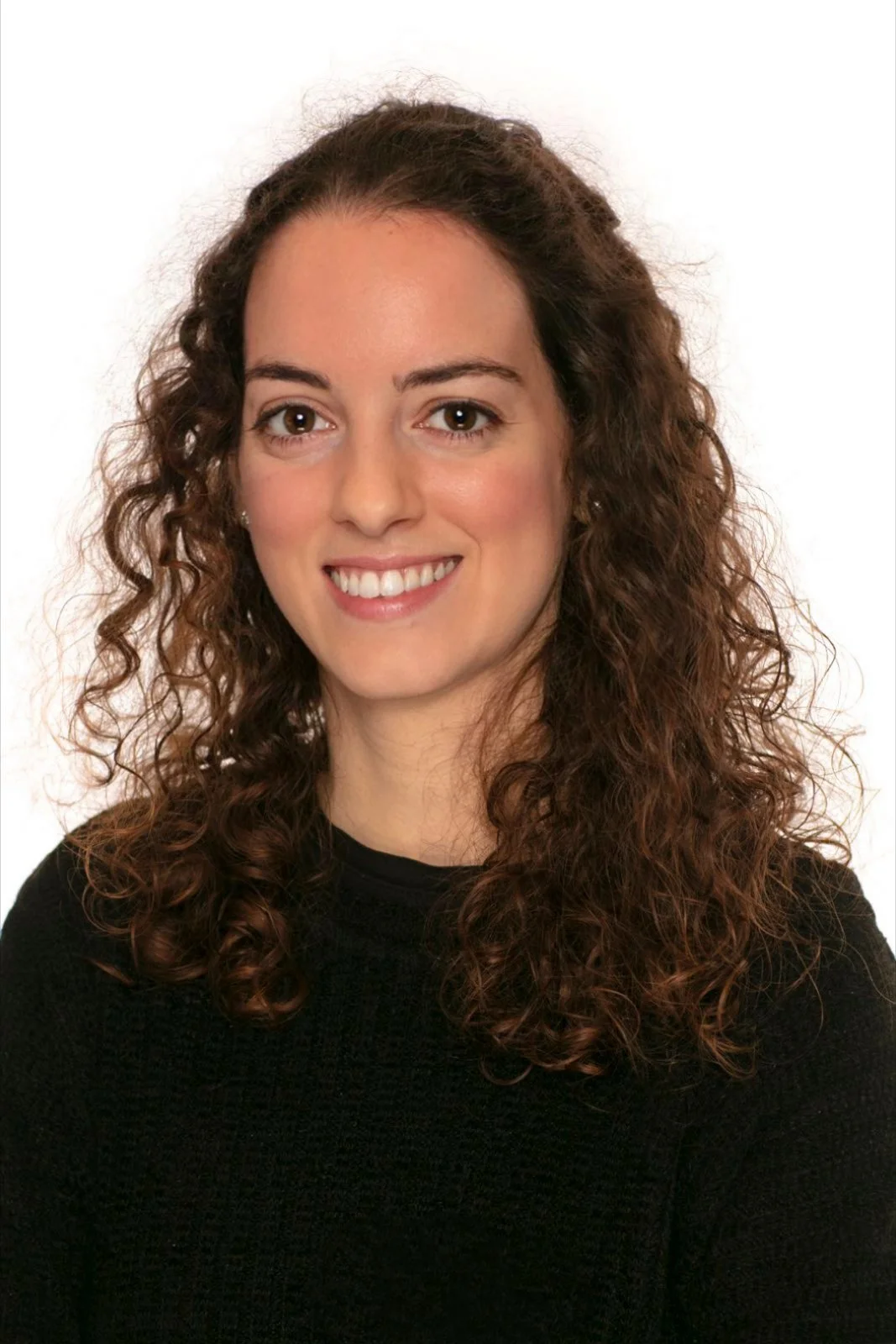
I am Anna-Maria Christodoulou, a PhD researcher at RITMO, UiO, working at the intersection of music and technology. My research aims to enhance computational music understanding, by combining multimodal information, such as audio, text, videos, and more. As a dedicated advocate for reliable, ethical, and accessible Music Information Retrieval (MIR) projects, I strive to make MIR datasets less biased and more efficient. My journey involves not only academic pursuits but also hands-on experimentation with MIR applications, such as music question--answering. Beyond my individual endeavors, I take pride in leading the Greek MIR Society - MUSAI Gr. Our mission is to bring MIR awareness to the Greek community, bridging the realms of music and computer science for enthusiasts and the general audience.
Computational analysis of music performance: A multimodal approach — Synopsis
Music is not only heard. It is also seen, felt, and embodied. This talk explores music as a multimodal phenomenon, investigating how different types of information, including audio, video, motion, text, scores, and physiological signals, contribute to our understanding of music performances, both for humans and computational systems.
Drawing from music technology, musicology, and psychology, the research develops a unified, task-oriented framework for multimodality in music, emphasizing the intentional fusion of complementary information sources. We will discuss how different modalities offer unique insights into performance understanding, and how machine learning systems process this complexity. Finally, we will investigate new methods for multimodal modeling of music data, including the use of large language models, modality filtering, and counterfactual reasoning.

Gilberto bernardes
Gilberto Bernardes holds a Ph.D. in Digital Media from the Universidade do Porto, under the joint program with the University of Texas at Austin. He is an Assistant Professor at the Universidade do Porto and a Senior Researcher at INESC TEC, where he leads the Sound and Music Computing Lab. His work spans over 90 publications in prominent scientific venues and has been recognized with several awards, including the Fraunhofer Portugal Prize and multiple best paper awards (e.g., DCE, CMMR). He has participated in 12 R&D projects and currently leads the Portuguese team on the Horizon Europe project EA-DIGIFOLK. His research interests include cognitive-inspired music representations, explainable generative AI, sound synthesis, and music and well-being. As a performer, he has appeared at Bimhuis, Concertgebouw, Casa da Música, Berklee College of Music, New York University, and the Seoul Computer Music Festival.
Computational Framework for Performance Analysis in Traditional Music: A Case Study of Carlos Paredes' Guitar-Voice Collaborations — Synopsis
Computational ethnomusicology, at the intersection of music information retrieval and ethnomusicology, opens possibilities for empirical comparative large-scale studies beyond traditional methods. Yet computational analysis of traditional music performance presents unique challenges, particularly in the absence of musical transcriptions and reliable, non-error-prone computational tools for inferring musical structure from recordings (Born, 2020; Lerch et al., 2020). Additionally, existing research presents significant gaps in addressing collaborative performances, where structural decisions emerge dynamically through performer interaction.
We examine Portuguese guitarist Carlos Paredes (1925–2004), whose artistic originality lies in establishing the Portuguese guitar as a solo instrument and reshaping its expressive role in twentieth-century Portuguese music. His collaborations with singers between 1958 and 1983 (Paredes, 2002) constitute a rich corpus of guitar-voice performances exemplifying complex interplay between structural musical content and expressive performative dimensions in traditional music. This complexity hinders understanding of how performers negotiate structural and expressive decisions in real-time collaborative contexts while representing idiosyncratic interpretative features: Portuguese guitar timbre and tuning, tempo fluctuations, and harmonic progressions.
We advance a computational framework combining automated audio processing with minimal manual annotations to analyze musical performance, focusing on voice-guitar interaction and underlying hierarchical musical structures. The computational pipeline employs cutting-edge source separation algorithms to isolate voice and guitar layers, enabling independent layer analysis and their interaction. We extract multiple time series describing performative and structural musical dimensions. We leverage the perceptually-inspired Tonal Interval Space (TIS) model for harmonic analysis, providing robust descriptions of dissonance, tonal dispersion, entropy, and harmonic changes. Furthermore, the framework automatically extracts and quantifies melodic and harmonic contours and rhythmic onset density. A comprehensive visualization system enables rapid inspection of multi-dimensional musical elements at scale, facilitating statistical analysis of time series from large corpora at multiple hierarchies.
Our initial evaluation comprised quantitative and qualitative analysis. Quantitative results show strong to moderate agreement against ground truth annotations by two expert musical analysts. Qualitative feedback highlighted directions for statistical and higher-level time series analysis to extrapolate recurring patterns per and across instrumental layers and unique moments detected as statistical outliers. Early musicological insights demonstrate expressive timing correlations with tonal dispersion and high rhythmic density moments, suggesting perceptually meaningful relationships. Voice-guitar interactions are characterized by dynamic hierarchy: when voice enters, guitar shifts to a supportive role, while instrumental sections exhibit greater rhythmic variability, reflecting Paredes's fluid, quasi-improvisatory character. This hierarchical organization aligns with expectations, as these represent his earliest collaborations involving standard Canção de Coimbra repertoire.
While acknowledging existing computational framework limitations, this study establishes a baseline enabling expansion to large corpus analysis. The validated methodology supports comparative analysis across Paredes' entire discography and facilitates stylistic idiosyncrasies through statistical outlier detection algorithms. By quantifying performance characteristics at scale, the framework reveals statistical traces of lifelong musical contributions, distinguishing unique collaborative strategies from general performance conventions. This approach offers significant potential for computational ethnomusicology, enabling systematic exploration of artistic evolution and stylistic fingerprinting in non-notated traditional music traditions.
Nádia Carvalho
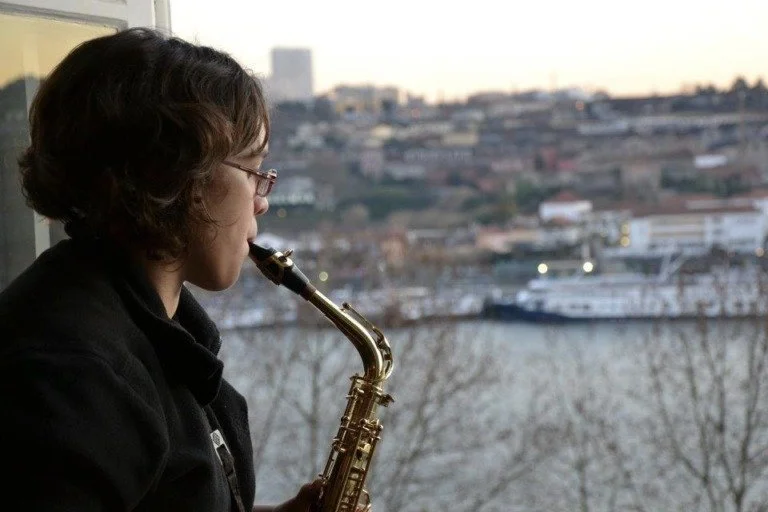
Nádia Carvalho (b. 1994) began her musical studies at the Costa Cabral Music Academy and later studied composition at ESMAE–Polytechnic Institute of Porto, including a semester at the Royal College of Music in Stockholm through the Erasmus program. She also earned an Integrated Master’s in Computer Engineering and Computing from FEUP, with a dissertation in the field of musical informatics. She is currently a PhD candidate in Digital Media at FEUP, conducting research at the Sound and Music Computing Lab (SMC/INESC-TEC), funded by FCT, under the supervision of Gilberto Bernardes. She collaborates on the European EA-Digifolk project, focusing on folk melody modeling, music similarity, and pattern recognition. Her research explores computational models for music analysis and generation, with an emphasis on latent-space representations, timbre, and co-creative electroacoustic practices. It has been presented at conferences including SMC, MCM, DLfM, and AM.ICAD. Alongside her academic work, she is an active saxophonist, performing primarily in the jazz genre, and collaborates with Arte no Tempo on contemporary music projects as an electroacoustic music artist and composer, including premieres for the Nova Música para Novos Músicos project and with the Re:Flexus Trio.
The Musical Work as a Mutable Interface: Towards a Co-Creative Electroacoustic Practice — Synopsis
Nádia’s research explores the musical work as a mutable interface, where composers, performers, and computers collaborate in creating music. Drawing on electroacoustic practice and machine learning, her work shows how tonal, timbral, and gestural aspects of music can be represented and explored using latent spaces and network models. In this talk, she will present her current research, focusing on studies of timbre-rich instruments and motion-based datasets, and highlighting strategies for co-improvisation and real-time collaborative performance. By modeling timbre, gesture, and phrase motion, performers can dynamically shape musical material while preserving the work's identity. Interactive systems thus become co-creative partners, supporting improvisation and responsive interaction. The talk will give students an overview of both the concepts and practical tools behind these systems. It demonstrates how technology can expand creative possibilities, rethink authorship, and enable new forms of interactive, co-created electroacoustic music.
Rui Penha
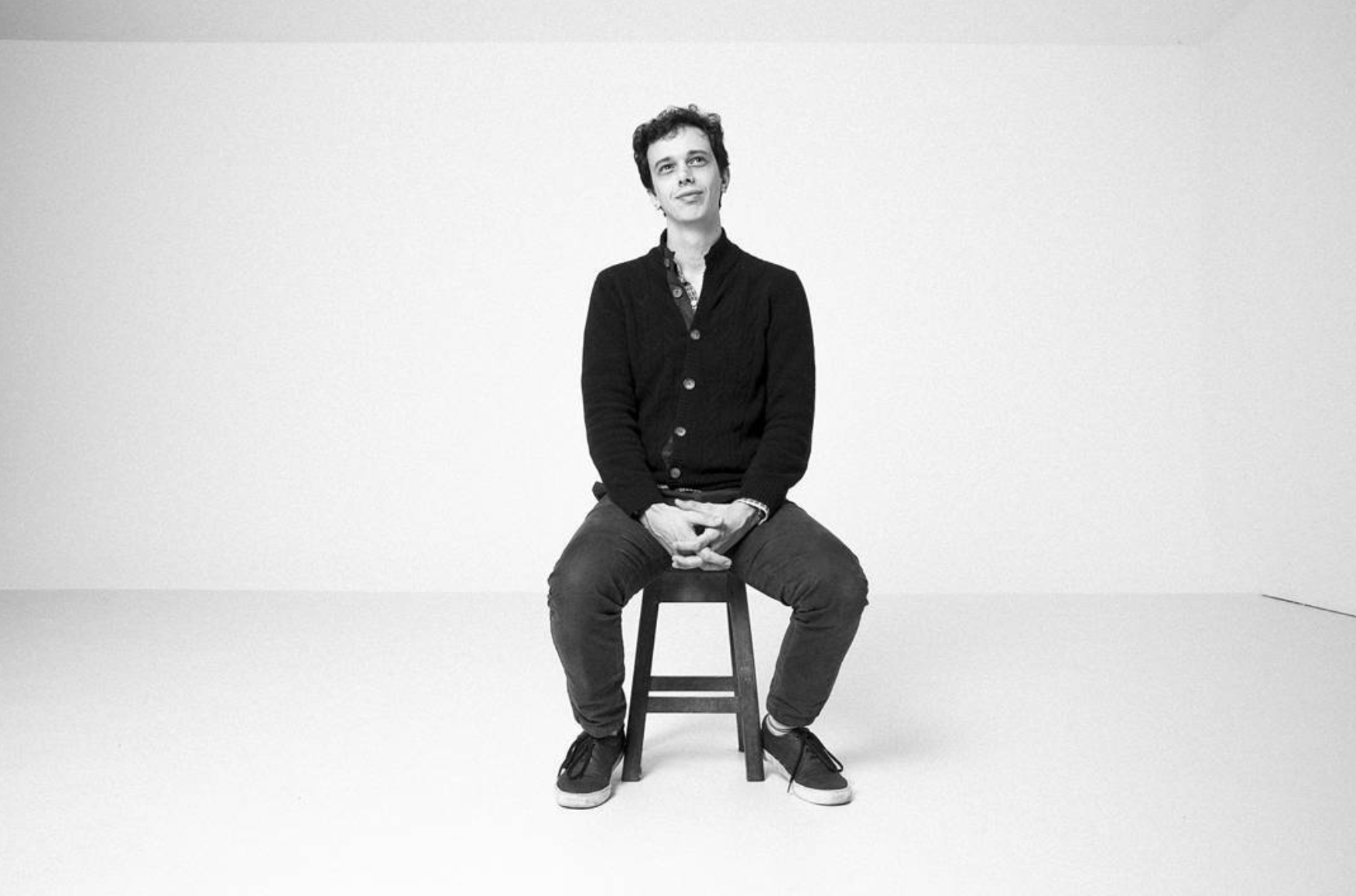
Rui Penha is a composer, performer, and researcher based in Porto, Portugal. His work explores the intersections between sound, technology, and artistic practice, often through collaborative and site-specific projects. He teaches composition and artistic research at the Escola Superior de Música e Artes do Espectáculo (ESMAE), where he is also vice-president for artistic research. Rui has taught at many Portuguese institutions, was a founding member and curator of Digitópia at Casa da Música, and has presented his work internationally in festivals, conferences, and research networks dedicated to artistic research, interactive music, and technological mediation in the arts.
Abusing technology like an artist — Synopsis
Artists and technologists often seem to inhabit parallel worlds: one driven by expressive curiosity, the other by functional precision. Yet the two have always been inseparable. Every artist, in learning their craft, learns to think through a technology — a violin, a camera, a circuit, a line of code — and every technological breakthrough carries the potential for new artistic worlds. But genuine invention seldom comes from using a tool “as intended.” New art emerges when we abuse technology: when we push it past efficiency and reliability, towards fragility, resistance, and surprise.
In this talk, I will explore how this deliberate abuse of technology — neither a rejection nor a naïve celebration of it — opens space for genuine creation. Drawing on examples from my own work with musical robotics, interactive performance and digital instrument design, I will argue that artistic research can help us reimagine our relationship with technology beyond the ideology of optimisation. From John Cage’s prepared piano to today’s algorithmic systems, what matters is not the technology itself but the quality of the relationship we build with it — one that remains embodied, inquisitive, and capable of wonder. To abuse technology like an artist is to reclaim our capacity to encounter the world not as resource, but as possibility.

Luís Bittencourt
Luís Bittencourt is a performing musician, researcher, professor, award-wining composer, music producer and science communicator. He holds a PhD and Master in Music Performance from University of Aveiro (Portugal) and Bachelor in Percussion from Federal University of Santa Maria (Brazil). As performing musician, he is considered “a master of sound experimentation” (Visão Magazine) with performances described as “a torrent of originality” (Casa da Música). As composer, he has obtained the 1st prize in the international competition “Legends of China-Confucius Arts Institute Award 2016”, and commissions from Guildhall School of Music and Drama, Lange Studios, Instagram® and Cannes Lions. A passionate and innovative researcher, Bittencourt is committed to exploring the intersections of sound, performance, and experimental creativity. He published two groundbreaking investigations in music performance, the first on the sonic affordances of water in contemporary percussion repertoire, and the second (funded by CAPES) on the instrumentality of “found” objects and digital music instruments. His pioneering research focused on specific, unexplored issues on experimentation in music performance and the redefinition of musical instruments, raising new insights and understandings about complex musical practices, setting the basis for his main contributions to the field and positioning him as a thought leader in the academic community. Bittencourt’s research were peer-reviewed as pacesetters to be followed in practice-infused research, due to the nature of the subjects and research methods applied, the mutuality among written and digital contents, and multimedia dissemination of its outputs and, above all, the knowledge generated, which derives from an articulation between his own artistic practice, theory and contextual information, and performative ethnographic fieldwork with world-renowned contemporary artists. Outputs from these investigations, achieved through peer-review processes, have been presented in important institutions and events such as the Performance Studies Network, The Transplanted Roots International Percussion Symposium, Meetings of the European Platform for Artistic Research in Music, International Summer Course for New Music Darmstadt, among other. Importantly, Bittencourt advocates for the dissemination of research work beyond the limits of academia, which he has been doing through several music performances and premieres, publishing recordings, summer courses and workshops, magazine/newspaper/TV interviews, podcasts and documentaries. His approach is based in the constant intersection of performing activities with academic inquiry, whereby theory emerges from a reflexive practice at the same time that practice is informed by theory in a feedback loop. This approach has contributed to his work as artist-researcher being classified, according to response from other researchers, as “innovative, thoroughly grounded and one of the most articulate and consequent approaches to artistic research in Portugal”. Bittencourt worked as contracted researcher at University of Aveiro, and has collaborated as invited professor with universities in Austria, USA, Brazil and Portugal. He is a member of the Percussive Arts Society (PAS), integrates the international editorial board of journals Shima, Per Musi and contributes regularly as scientific reviewer for the SAR conferences, Post-ip: Journal of the International Forum of Studies in Music and Dance, Brazilian Meetings of Artistic Research, and other. Currently, Bittencourt serves as a professor in the Master’s Degree in Computer Music and Sound Design at the University of Coimbra and the Escola Superior Artística do Porto (ESAP).
Website | Instagram | Facebook | LinkedIn | Ciencia Vitae
Directionlessness and the Question of Instrumentality in Artistic-Research — Synopsis
This lecture-performance presents Directionlessness, a work born from a transtextual compositional approach and inspired by the aesthetic and conceptual legacies of Peter Ablinger and Morton Feldman. In its version for Xylosynth (a mallet-keyboard MIDI instrument) and live processing, the piece creates a contemplative space where sound exists without formal direction—flowing, unfolding, and passing through the listener with no fixed origin or destination. Quiet sonorities, subtle articulations, and textural shifts evoke the unnoticed acoustic life of raindrops, inviting an expanded awareness of minimal sonic events.
Alongside the performance, Luís Bittencourt discusses his broader artistic-research practice, which lies at the intersection of contemporary music, improvisation, experimental artistic processes, and percussion performance. His research investigates how musical instruments—and the very idea of instrumentality—emerge from cultural, perceptual, and performative relationships with objects. Through this lens, even the most ordinary material can become a site for musical expression and epistemic transformation.
Drawing from Western percussion’s radical openness—where “almost any sound-producing object” may serve as an instrument—this lecture examines how the recognition of an object as a musical instrument shapes creative processes, performative possibilities, and listeners’ modes of engagement. Using practice-based and performative-ethnographic methodologies, it explores the artistic, conceptual, and social implications of acoustic, digital, and hybrid instrument affordances.
By situating Directionlessness within these inquiries, the session proposes an expanded understanding of musical creation: one where sound, gesture, and materiality co-constitute meaning; where improvisation and notation converge; and where instrumentality becomes both a creative tool and a philosophical question.

SUR LA STRE NURO – ON THE TIGHTROPE – Dialogues on Sound Experimentalism in Portugal - a film by luís fernandes
Film screening with the director + post-session Q&A
This documentary by Luís Fernandes takes viewers on an exploratory journey through Portugal’s experimental music scene, weaving together interviews and first-hand accounts from some of the country’s most influential contemporary artists. Through these privileged perspectives, we gain insight into the creative and transformative processes that turn intangible ideas into tangible works—where the abstract takes shape and becomes something concrete, open for everyone to experience. (Ricardo Duarte)
The film unfolds as a narrative centered on the artistic and conceptual practices of several contemporary Portuguese sound artists. Through conversations, it reveals a range of approaches to experimentation and creative discovery.
Luís Fernandes
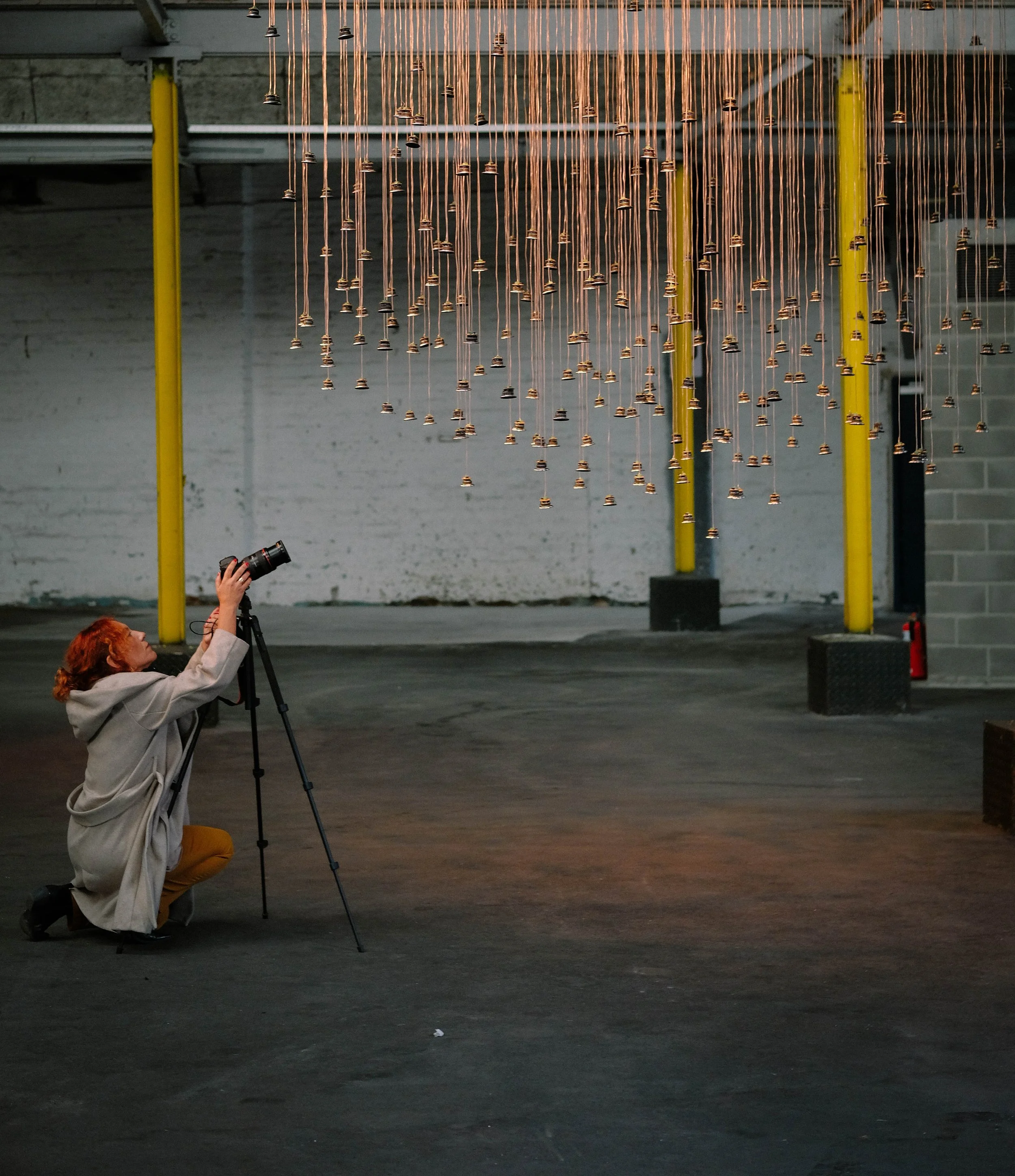
Artista sonoro, realizador e formador multimédia, acumula mais de duas décadas de experiência musical. Em cada projeto, busca captar e antecipar a ideia de imprevisibilidade, caos organizado e impermanência dos fenómenos no tempo e no espaço. Com licenciatura em Psicologia e mestrado em Cinema Documental pela ECI Barcelona, é laureado em diversos festivais de cinema dedicados a música e dança.
©Felix Blume
raquel castro
Raquel Castro is a researcher, curator, and filmmaker. She is the founder and director of the sound art festival Lisboa Soa and the international symposium Invisible Places – sound, urbanism and sense of place. She holds a PhD in Communication and Arts from Universidade Nova de Lisboa and is a full researcher at the Center for Research in Applied Communications, Culture, and New Technologies at Universidade Lusófona de Lisboa, where she teaches in the undergraduate program in Sound Science and Technology.
She curated the series of sound installation exhibitions Sound Art in Public Spaces, presented by the following organizations: Wilde Westen (Belgium), November Music (Netherlands), Spor Festival (Denmark), Onassis Stegi (Greece), and Ultima Oslo (Norway) between 2021 and 2023, within the European project Sounds Now. She has also been a guest curator at the Tsonami Festival (Chile) and collaborates regularly with other organizations, artists, and festivals.
Her activities as a researcher and curator have resulted in several documentaries, such as Soundwalkers (2008) and SOA (2020), where interviews, art, and soundscapes intertwine to expand awareness about sound. SOA was broadcast by RTP2 (as a series) and by Netflix (as a film). Her contributions have earned her wide international recognition: in March 2023, she was appointed President of the Executive Council of the World Forum for Acoustic Ecology, a position she held until September 2025.
In 2022, Castro founded the cultural association Sonora, through which she creates and produces transdisciplinary projects at the intersection of art, science, ecology, and sound.
Instagram | Lisboa Soa | Sonora | Facebook
Curatorial Perspectives on Sound, Ecology, and Public Space — Synopsis
This class offers a concise introduction to curatorial practices that treat sound as ecological matter and as a relational force between bodies, places, and systems. Starting from the history of sound art—ranging from the first sound recording technologies to contemporary practices that integrate ecology, science, and public space—it examines modes of listening that go beyond representation to assert themselves as action, relation, and care. Case studies will be explored to reveal how sound art has the potential to produce knowledge, make ecosystems and invisible tensions audible, and transform the perception of public space. Curatorship is presented here as mediation: a practice that creates conditions for listening, articulates environment and community, and exposes the ethical responsibilities involved in representing places, species, and histories.
The course includes references to site-specific projects, installations, and festivals, particularly Lisboa Soa, which demonstrate how listening can generate forms of shared attention, participation, and environmental imagination.
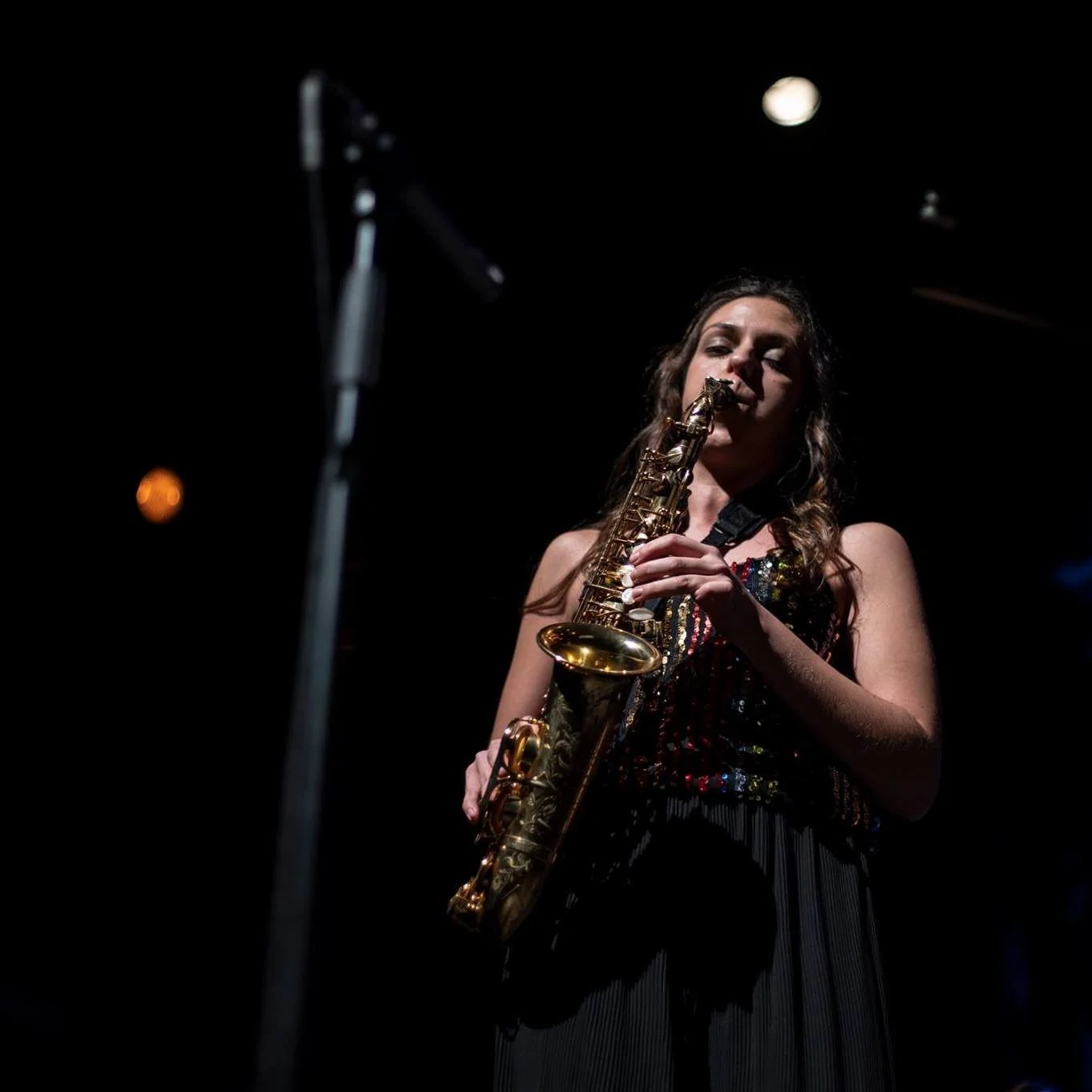
Nádia Moura
Nádia Moura is an Integrated Researcher at CEIS20 (Centre for Interdisciplinary Studies) and an Invited Assistant Professor in Music Studies at Faculty of Arts and Humanities (University of Coimbra). She holds a doctoral degree in Science and Technology of the Arts (Universidade Católica Portuguesa). During her PhD (FCT fellowship 2020.05257.BD), she developed a multimodal analysis to investigate body gestures in saxophone performance, combining the fields of music and sound, biomechanics, and psychology. She conducted research as a visiting student at RITMO (Oslo) and IPEM (Ghent). She completed a Master's Degree in Music Teaching (2019) at Universidade Católica Portuguesa (research in music performance anxiety) and a Bachelor's Degree in Music - Saxophone Performance (2017) at University of Aveiro. Her main areas of research are Music Performance and Teaching, Music Performance Anxiety, Music Perception, and Music Biomechanics, fields in which she has multiple publications. Currently, she is in the main team of the FCT project "MUS-A: Music Performance Anxiety in Adolescents" (2022.05771.PTDC), and PI of the 2025 seed winner project "Between voices of music: Forging musical identities in Carlos Paredes’ guitar-voice collaborations in Fado-Canção de Coimbra" (Santander/UC).
Beyond Sound: Multimodal Perspectives on Gesture in Instrumental Performance — Synopsis
This lecture explores the role of body movement in instrumental music performance, focusing on how performers’ gestures shape technique, expressiveness, and communication. Grounded in the embodied music cognition paradigm and informed by interdisciplinary perspectives on gesture, multimodality, and the relationship between body, sound, and movement (Jensenius et al., 2010; Leman, 2008; Lesaffre, Maes & Leman, 2017), the session presents findings from a multimodal research project on gesture-making in saxophone performance.
Drawing on objective data from motion capture, video and audio analyses, as well as subjective impressions from performers and audiences, the lecture will outline a series of empirical studies that examine performative gesture from multiple angles. These include video-based observational analyses that identify recurrent gestural patterns among saxophonists, kinematic investigations of knee flexion and postural sway in relation to musical structure, interviews capturing performers’ experiential insights, and audience perception experiments testing how expressive motion influences evaluative judgments and multisensory integration.
By articulating theoretical foundations with empirical studies (Moura et al., 2023, 2024a, 2024b), the lecture illustrates how hybrid and transdisciplinary methodologies can deepen our understanding of instrumental performance. The results offer new perspectives on the cognitive and motor processes underlying musical expression, and point toward pedagogical applications in which conscious gesture use enhances both performance quality, expression, and meaning.

Jônatas Manzolli
Jônatas Manzolli is a Full Professor at the Institute of Arts, State University of Campinas (Unicamp), where he has led interdisciplinary research for over 25 years at the Interdisciplinary Nucleus for Sound Studies (NICS). His work bridges Music Composition, Computational Music, Human–Computer Interaction, and Computer-Aided Music Analysis, fostering dialogue between science and the arts. He has published more than 250 articles and supervised over 25 doctoral and master’s dissertations, with many former students now active in leading institutions worldwide.
His international collaborations include visiting positions at ETH Zurich, Universitat Pompeu Fabra (Barcelona), CIRMMT (McGill University), and the Donders Institute (Netherlands). As a composer, his portfolio spans orchestral, chamber, and electroacoustic works, including three operas such as Descobertas (2016) and Pássaros de Papel, awarded by the Rockefeller Foundation (2018–2023). His innovative projects, such as the Multimodal Brain Orchestra (2009), exemplify his commitment to connecting artistic creation and scientific research.
Creativity — Synopsis
The workshop explores how music composition, computer modelling, and music cognition come together to create new ways of making music, reflecting on the evolving dialogue between human creativity and computational processes. Composing is treated not as a fixed methodology but as a continual balance between intuition and structured work. This leads to the idea of nomadic composition, where tools and technologies shape and interact with composers; yet beyond the tools, the focus is on building meaningful collaboration in today’s music practice. Ultimately, composing with machines is not about control but about conversation—an open, active engagement with tools and the real world. The workshop will include examples illustrating the ideas introduced.
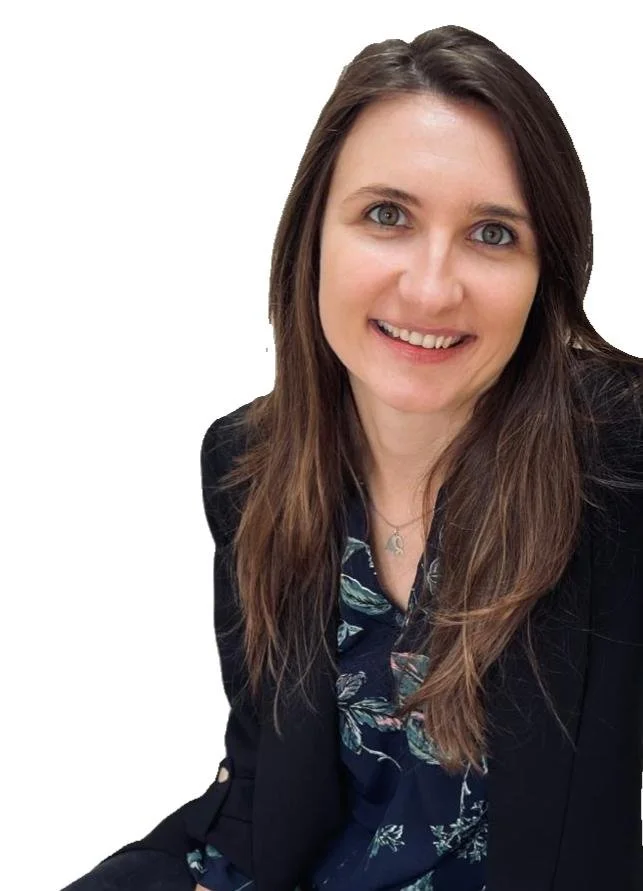
Aleksandra Michałko
Aleksandra Michałko investigates the interplay between musical cognition, technology, and skill acquisition in instrumental music training. During her bachelor’s studies in linguistics and literature and her master’s degrees in music performance and in cognitive and computational musicology, she explored how figurative language shapes musical interpretation and how semantic descriptions of timbre relate to the acoustic properties of flute sounds. She continued this line of inquiry during her PhD at the Institute for Systematic Musicology (IPEM) at Ghent University, where she examined how emerging technologies—such as augmented reality and wearable robotics—can transform instrumental pedagogy by enhancing learning and accelerating the development of complex motor skills.
High Tech and Sensorimotor Skill Acquisition in Instrumental Music Learning — Synopsis
In this lecture, we will delve into how emerging technologies can reshape pedagogical approaches and open new avenues for developing instrumental expertise. In particular, we will explore the potential of two advanced technologies—wearable upper-limb exoskeletons and augmented reality (AR)—to support instrumental music training. We will examine how bidirectional kinaesthetic haptic feedback delivered through lightweight exoskeletons may assist sensorimotor learning, enhance communication between musicians, and provide new forms of guidance during ensemble performance. As a second example, we will consider how AR environments, including 2D and 3D avatar-based systems, can create interactive practice situations that extend traditional rehearsal opportunities and offer innovative ways to study musicians’ practice behaviours.
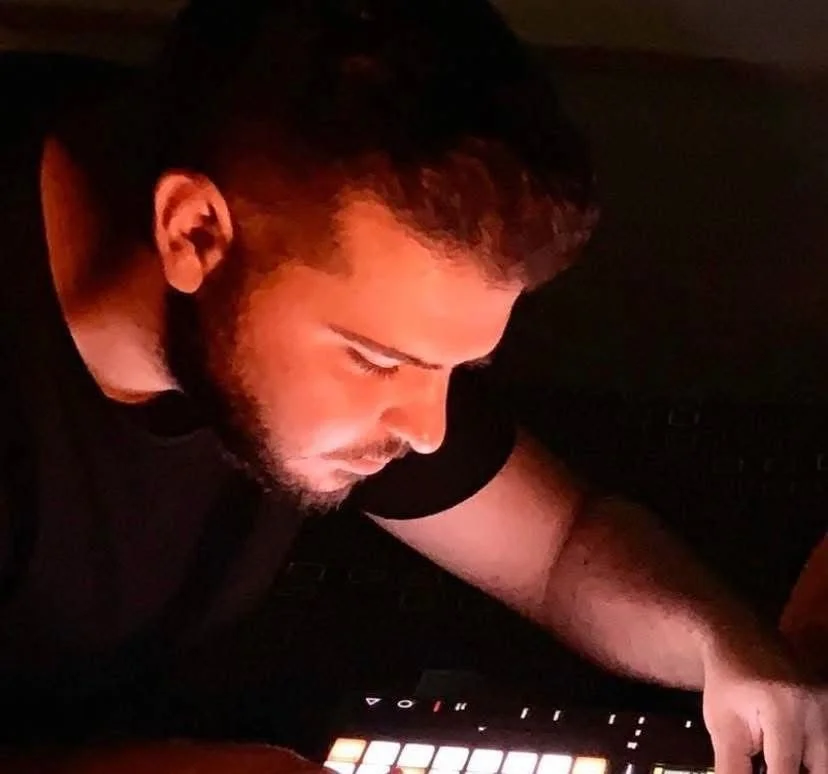
Rafael Maia
Rafael Maia is a composer, sound artist, and researcher from Porto. His work unfolds at the intersection of sound art, performance, theatre, and dance, with a particular focus on timbral creation and expression. He is currently pursuing his doctoral research at CITAR – Catholic University of Porto, and is an Invited Professor at the School of Music and Performing Arts (ESMAE). His artistic work has been presented at institutions such as MAAT, Serralves, Semibreve, and Casa da Música, as well as in countries including France, Germany, Belgium, the Netherlands, Scotland, Lithuania, and Sweden.
https://rafamaianet.wixsite.com/rafaelmaia | Instagram
Transforming perception into Expression — Synopsis
This seminar offers a brief glimpse into a practice-based artistic research project that explores new strategies for timbral creation and expression. Bringing together art, technology, and sonic experimentation, it invites reflection on timbre not as a physical inevitability of the world, but as a possibility for its interpretation. Through practical examples and theoretical insights, it presents a subversive approach to timbre, opening space to consider its social dimension as well.
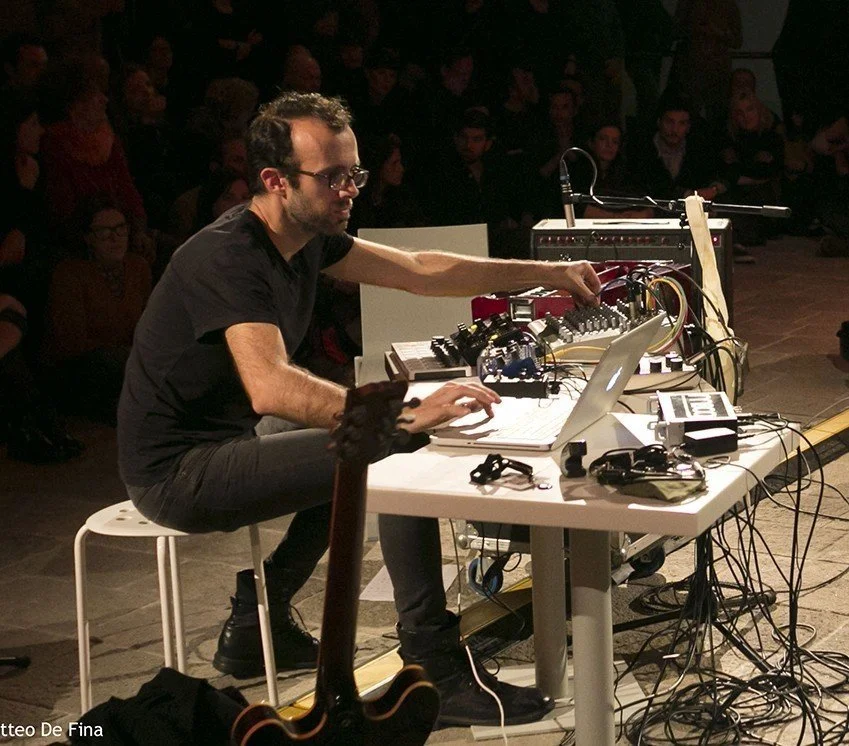
Riccardo D. Wanke
Riccardo D. Wanke, author of the book “Sound in The Ecstatic-Materialist Perspective on Experimental Music” (2021, Routledge), is an interdisciplinary researcher and musician. He conducted doctoral and post-doctoral research in both musicology and natural sciences. He is currently integrated member of the Centre for Interdisciplinary Studies – CEIS20, University of Coimbra (PT) and contracted professor at the Faculty of Arts and Humanities, University Coimbra (PT). His central interest is the 20th and 21st century music, sound perception & aesthetics, music psychology, analysis and theory. As a composer and performer, he explores the electronic manipulation of sound, having performed live worldwide and published music for international labels.
Seeing Sounds, Hearing Shapes. The morphodynamics of sounds — Synopsis
This contribution explores the potential of sounds used in music within the broader realm of sound aesthetics. UNESCO’s Year of Sound 2021 initiated a wider reflection on approaches to sound. Over the past century, we have become accustomed to engaging with a multidimensional notion of sound shaped by composers (e.g., Edgard Varèse, John Cage, Pierre Schaeffer, György Ligeti, Giacinto Scelsi, Helmut Lachenmann, Morton Feldman, Gérard Grisey, Iannis Xenakis) and theorists (e.g., Ernst Kurth, Vladimir Jankélévitch, Michel Imberty, Irène Deliège, Stephen McAdams, Robert Pasnau, Roger Scruton, Stephan Koelsch, Timothy D. Griffiths, Michael Kubovy, Isabelle Peretz). Together, they provided an interdisciplinary springboard—artistic, social, and scientific—to address the challenges of our current sonic ecosystem.
Drawing on Gestalt psychology (Albert Bregman, Gaetano Kanizsa) and morphodynamic theory (René Thom, Jean Petitot), I will outline new perspective over aesthetically organized sounds, possibly conceived as geometries in motion. This perspective permeates our everyday environment, including music, sonic arts, immersive media, 3D advertisements, film soundtracks, and art installations, with a particular focus on contemporary and experimental music practices. While these sound patterns may initially seem complex, ambiguous, or even overwhelming, they are often more familiar than we might expect. Their phenomenal experience emerges as meaningful patterns connecting to our embodied experience of the world. In this contribution, I will present some of results of recent surveys and I hope to offer new insights into certain musical practices, which can be extended to a wide array of sonic experiences today.
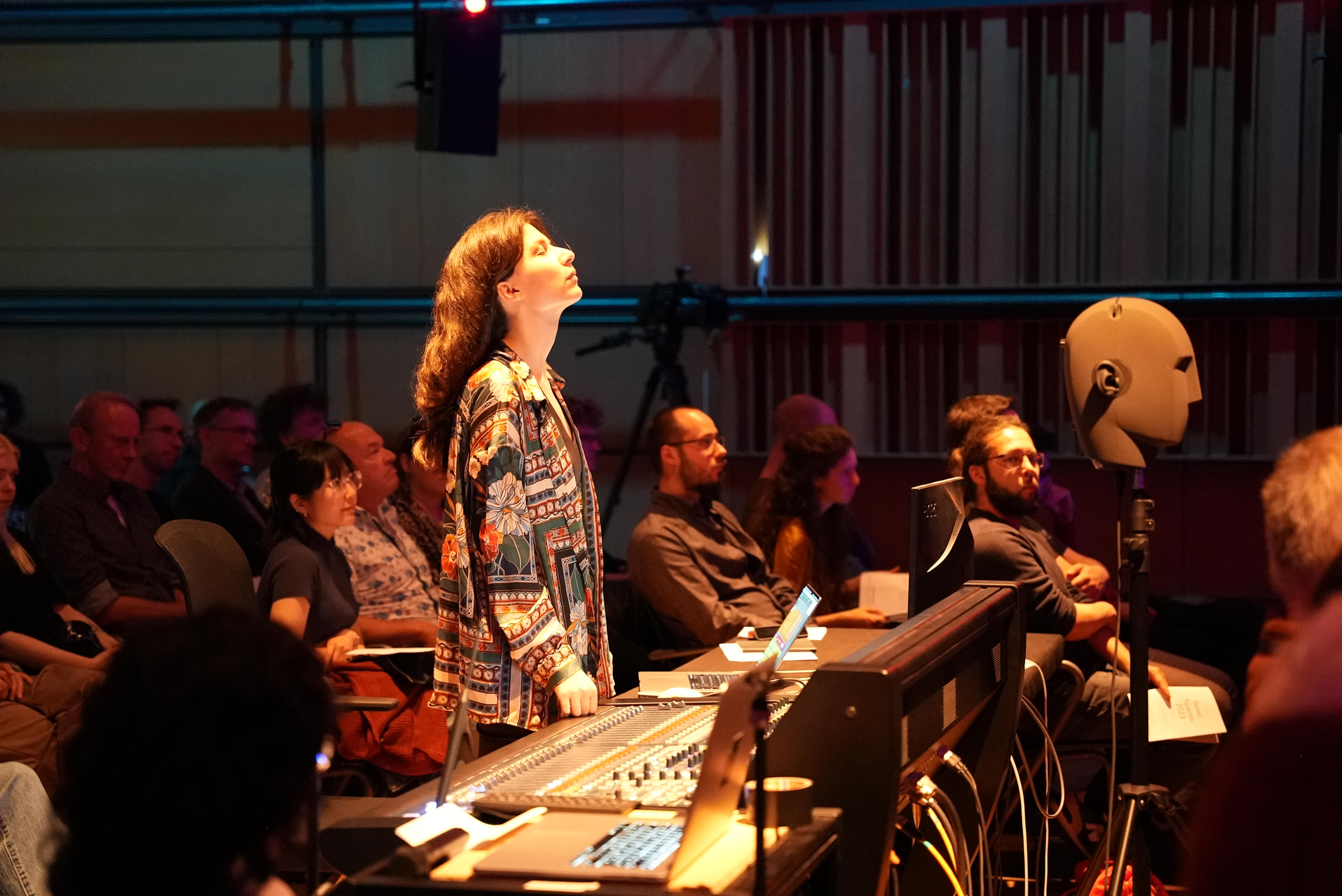
Mariam Gviniashvili
Mariam Gviniashvili is a composer and sound artist working at the intersection of electroacoustic music, 3D sound, and multimedia performance. Her work explores the physical and emotional dimensions of sound and space, often integrating visuals and live performance.
Originally from Georgia, Mariam’s musical journey began in early childhood with singing and piano, eventually leading her to composition studies at the Tbilisi State Conservatoire, the Liszt Academy of Music, and the Norwegian Academy of Music. This diverse background informs her artistic themes, from the distractions of online meetings in DAYDREAMING (2022) to the “strange cosmic ballet” (5 against 4) of the audiovisual piece REVELATION (2021), and DECONSTRUCTION (2020), a reflection on the spread patterns of viruses.
Her work has been presented at festivals, venues, and radio broadcasts worldwide, including INA GRM, ZKM | Center for Art and Media, Ars Electronica, EMPAC, New York Electroacoustic Music Festival, BEAST FEaST, Virginia Tech, Transitions at CCRMA, MA/IN, ICMC, Mixtur Festival, Klingt Gut, In Situ Festival, Heroines of Sound, Ultima Festival, and BBC Radio. Mariam is the recipient of two Honorary Mentions from Prix Ars Electronica (2021, 2023), the PRIX CIME, and the Work of the Year Award (NKF).
Website | Instagram | Facebook
Artistic Practice in Context — Synopsis
In this talk, I will reflect on my artistic practice, examining how my approach to composition and creative expression has evolved. I will also discuss my experience as a freelance artist, highlighting the challenges and opportunities it presents, which I believe are valuable for students to know. I will also explore the different methods, tools, and formats I have worked with, and how experimentation and curiosity have shaped my work. Through examples of my projects, I will share insights into developing a creative practice, navigating various genres, and articulating ideas across diverse artistic contexts.